
Journalism · Publishing · Civic participation
Charlotta Bass
1874–1969 (NPS dates)Uncertain: NPS dates
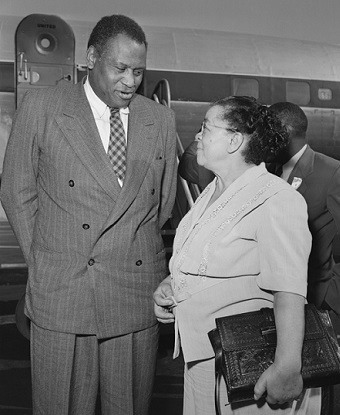
Bass published the California Eagle in Los Angeles and used its reporting to challenge housing and employment discrimination. She championed Black businesses and civil liberties. In 1952, she became the first African American woman nominated for U.S. vice president, running on the Progressive Party ticket.[1]
Read this story
Bass published the California Eagle in Los Angeles and used its reporting to challenge housing and employment discrimination. She championed Black businesses and civil liberties. In 1952, she became the first African American woman nominated for U.S. vice president, running on the Progressive Party ticket.[1]
Local connection. Published the California Eagle in Los Angeles, reporting on discrimination affecting city residents.
Impact reached: California Eagle readers; National civil-rights audiences. (Impact describes who was reached; it is not a place of residence.)
From institutional research
Deeper context
California Eagle Publishing Company Offices, Historic-Cultural Monument staff report
Los Angeles City Planning / Cultural Heritage Commission · 2024-04-04
According to Los Angeles City Planning / Cultural Heritage Commission: Bass acquired the California Eagle in 1912 and sold it to Loren Miller in 1951. The report connects the newspaper to offices at 4071–4075 South Central Avenue and documents its role in challenging employment discrimination and restrictive housing covenants. The paper’s campaigns included Don’t Shop Where You Can’t Work.[2]
Inquiry & making
Inquiry and making prompt
Choose an issue that would improve our school. Write a headline and one fact a reporter would need to check.
Places
Where Charlotta was born, had roots or studied, and worked — distinguished from where their impact reached.
- Born
- Sumter, South Carolina (NPS account)
- Roots / education
- Providence, Rhode Island
- Worked
- Los Angeles, California
| Relationship | Documented place | Map point | Sources |
|---|---|---|---|
| Roots / education | Providence, Rhode Island | Providence city, RICensus representative point | [1] |
| Work | Los Angeles, California | Los Angeles city, CACensus representative point | [1] |
| Birthplace | Sumter, South Carolina (NPS account) | Not mapped — Uncertain or disputed historical location: excluded from numeric distance ranking. | |
Timeline
c. 1874
Born — Sumter, South Carolina (NPS account)[1]
Uncertainty: NPS dates
Date from the article's life dates/text; see references.
1912
Bass acquired the California Eagle in 1912 and sold it to Loren Miller in 1951.[2]
1951
Bass acquired the California Eagle in 1912 and sold it to Loren Miller in 1951.[2]
1952
In 1952, she became the first African American woman nominated for U.[1]
Date from the article's life dates/text; see references.
1969
Died[1]
Gallery
Portrait plus 1 source-grounded contextual item. Every image links to its source record.
References
- [1]National Park Service: Charlotta Bass
Supports: Newspaper, civic activity, vice-presidential candidacy and NPS life dates.
- [2]California Eagle Publishing Company Offices, Historic-Cultural Monument staff report
Los Angeles City Planning / Cultural Heritage Commission · 2024-04-04
Supports: Bass acquired the California Eagle in 1912 and sold it to Loren Miller in 1951. The report connects the newspaper to offices at 4071–4075 South Central Avenue and documents its role in challenging employment discrimination and restrictive housing covenants. The paper’s campaigns included Don’t Shop Where You Can’t Work.
Last reviewed 2026-11-08 · Initial research edition · Record ID charlotta-bass. A curated, source-informed article — not openly editable and not independently scholar-reviewed. Corrections process.