
Civil rights · Civic participation · Legal advocacy · Community care
Claudette Colvin
1939–2026
At fifteen, Colvin challenged segregated bus seating in Montgomery on March 2, 1955. In 1956, she testified as a plaintiff in Browder v. Gayle, the federal case that helped end bus segregation. Her actions joined the work of other women, lawyers, and boycotters. She later cared for older adults as a nursing assistant.[1],[2],[3],[4],[5],[6],[7],[8]
Read this story
At fifteen, Colvin challenged segregated bus seating in Montgomery on March 2, 1955. In 1956, she testified as a plaintiff in Browder v. Gayle, the federal case that helped end bus segregation. Her actions joined the work of other women, lawyers, and boycotters. She later cared for older adults as a nursing assistant.[1],[2],[3],[4],[5],[6],[7],[8]
Local connection. Her main civil-rights work took place in Montgomery, Alabama, and she later lived and worked in New York. San Francisco students can also encounter her own voice in a January 15, 2005 interview at San Francisco Public Library. This is a documented public appearance, not evidence of Bay Area residence.
Impact reached: Montgomery bus riders; The campaign against segregated public transportation; Young people learning about civic participation. (Impact describes who was reached; it is not a place of residence.)
From institutional research
Deeper context
Fred D. Gray: Remarks on the Death of Claudette Colvin (February 5, 2026)
Primary-source institution
According to Primary-source institution: 1955 — At fifteen, refused to relinquish her seat on a segregated Montgomery bus; police arrested her.[9]
Stanford King Institute: Browder v. Gayle, 352 U.S. 903
Stanford
According to Stanford: 1956 — Named among the original plaintiffs when the federal Browder v. Gayle case was filed. 1956 — Federal district judges ruled bus segregation unconstitutional in the case she helped bring. 1956 — The U.S. Supreme Court affirmed the district court’s ruling. 1956 — Montgomery buses began operating on an integrated basis after the boycott ended.[10]
Primary record: Gave testimony in Browder v. Gayle.
Stanford
According to Stanford: 1956 — Gave testimony in Browder v. Gayle.[11]
San Francisco Public Library: Claudette Colvin interviewed by Dr. Marion Woods
Primary-source institution
According to Primary-source institution: 2005 — Shared her history in an interview at San Francisco Public Library.[12]
Claudette Colvin Foundation: About
Primary-source institution
According to Primary-source institution: 2021 — Her juvenile record was expunged; this did not occur in 1956.[13]
Inquiry & making
Inquiry and making prompt
Compare two ways people worked for change: telling a court what happened and organizing a boycott. How did the approaches support each other? Draw a fair classroom rule and explain whom it helps.
Places
Where Claudette was born, had roots or studied, and worked — distinguished from where their impact reached.
- Born
- Birmingham, Alabama
- Roots / education
- Pine Level, Montgomery County, Alabama; Montgomery, Alabama; Bronx, New York
- Worked
- Montgomery, Alabama; New York City, New York
| Relationship | Documented place | Map point | Sources |
|---|---|---|---|
| Birthplace | Birmingham, Alabama | Birmingham city, ALCensus representative point | [1][2][3][4][5][6][7][8] |
| Roots / education | Montgomery, Alabama | Montgomery city, ALCensus representative point | [1][2][3][4][5][6][7][8] |
| Roots / education | Bronx, New York | Bronx County, NYCensus representative point · county-level, coarser | [1][2][3][4][5][6][7][8] |
| Work | Montgomery, Alabama | Montgomery city, ALCensus representative point | [1][2][3][4][5][6][7][8] |
| Work | New York City, New York | New York city, NYCensus representative point | [1][2][3][4][5][6][7][8] |
| Public appearance | San Francisco Public Library, San Francisco, California | San Francisco city, CAGeoNames populated-city point | [6] |
| Roots / education | Pine Level, Montgomery County, Alabama | Not mapped — Rural community is documented. The Census Pine Level town is in a different county; do not use it. No community-level point has been verified in this package. | |
Timeline
1939-09-05
Born in Birmingham, Alabama.[3]
1955-03-02
At fifteen, refused to relinquish her seat on a segregated Montgomery bus; police arrested her.[1],[9]
1956-02-01
Named among the original plaintiffs when the federal Browder v. Gayle case was filed.[2],[10]
1956-05-11
Gave testimony in Browder v. Gayle.[11]
1956-06-05
Federal district judges ruled bus segregation unconstitutional in the case she helped bring.[2],[10]
1956-11-13
The U.S. Supreme Court affirmed the district court’s ruling.[2],[10]
1956-12-21
Montgomery buses began operating on an integrated basis after the boycott ended.[2],[10]
2005-01-15
Shared her history in an interview at San Francisco Public Library.[6],[12]
2021-12
Her juvenile record was expunged; this did not occur in 1956.[3],[8],[13]
2026-01-13
Died in Texas at age 86.[3]
Gallery
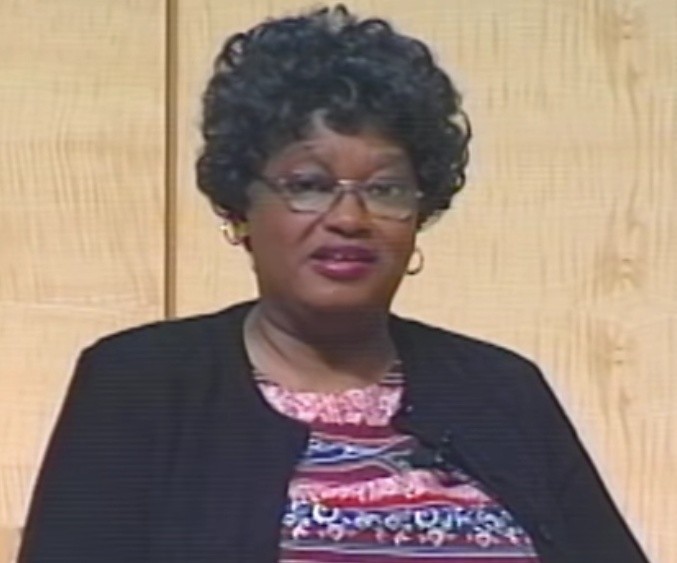
Portrait only in this edition; no reuse-supported contextual media has been verified for this figure yet.
References
- [1]Fred D. Gray: Remarks on the Death of Claudette Colvin (February 5, 2026)
Supports: Her own lawyer distinguishes the March 2, 1955 arrest case from Browder v. Gayle and describes collective women’s and youth leadership.
- [2]Stanford King Institute: Browder v. Gayle, 352 U.S. 903
Supports: February 1, 1956 filing; five original and four continuing plaintiffs; June 5 ruling; November 13 Supreme Court affirmation; December implementation.
- [3]Family funeral program: Celebrating the Life and Legacy of Claudette Colvin
Supports: Born September 5, 1939 in Birmingham; died January 13, 2026 in Texas; Pine Level and Montgomery childhood; later nursing-assistant work.
- [4]StoryCorps: Claudette Colvin and Piya Kochar, January 6, 2005
Supports: Colvin’s own account of her bus resistance, childhood, family, and decades of nursing-assistant work.
- [5]Encyclopedia of Alabama: Claudette Colvin
Supports: Montgomery schooling and activism, New York care work, and the broader community context. Its move-year and expungement-year inconsistencies are not used.
- [6]San Francisco Public Library: Claudette Colvin interviewed by Dr. Marion Woods
Supports: Primary video records the January 15, 2005 San Francisco library appearance; the video page identifies the library as creator and carries a Creative Commons Attribution reuse statement.
- [7]NJ TRANSIT Board recognizes Claudette Colvin (July 11, 2013)
Supports: Contemporaneous institutional record identifies Colvin as a Bronx resident.
- [8]Claudette Colvin Foundation: About
Supports: Childhood places and schools, nursing-assistant career, and December 2021 expungement.
- [9]Fred D. Gray: Remarks on the Death of Claudette Colvin (February 5, 2026)
Primary-source institution
Supports: 1955 — At fifteen, refused to relinquish her seat on a segregated Montgomery bus; police arrested her.
- [10]Stanford King Institute: Browder v. Gayle, 352 U.S. 903
Stanford
Supports: 1956 — Named among the original plaintiffs when the federal Browder v. Gayle case was filed. 1956 — Federal district judges ruled bus segregation unconstitutional in the case she helped bring. 1956 — The U.S. Supreme Court affirmed the district court’s ruling. 1956 — Montgomery buses began operating on an integrated basis after the boycott ended.
- [11]Primary record: Gave testimony in Browder v. Gayle.
Stanford
Supports: 1956 — Gave testimony in Browder v. Gayle.
- [12]San Francisco Public Library: Claudette Colvin interviewed by Dr. Marion Woods
Primary-source institution
Supports: 2005 — Shared her history in an interview at San Francisco Public Library.
- [13]Claudette Colvin Foundation: About
Primary-source institution
Supports: 2021 — Her juvenile record was expunged; this did not occur in 1956.
Last reviewed 2026-11-08 · Requested addition; source and portrait evidence reviewed · Record ID claudette-colvin. A curated, source-informed article — not openly editable and not independently scholar-reviewed. Corrections process.