
Sculpture · Black and Indigenous history
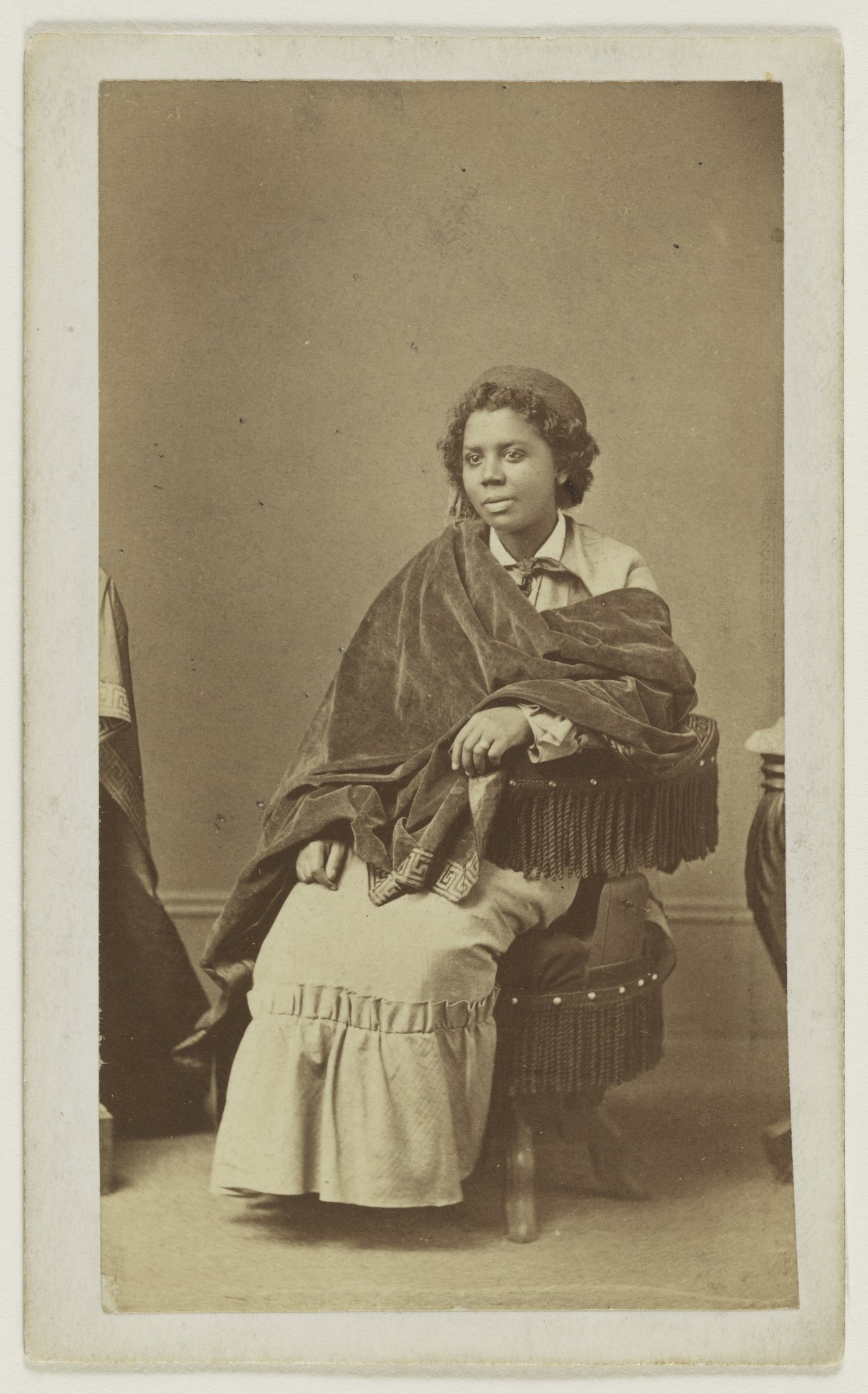
Edmonia Lewis
about 1844–1907Uncertain: Approximate birth year
Lewis developed an international career as a sculptor, moving from the United States to Rome and working in marble. Her subjects included abolitionists, women, freedom, and Indigenous heritage. She helped widen the possibilities for Black and Indigenous women in professional art during the nineteenth century.[1],[2]
Read this story
Lewis developed an international career as a sculptor, moving from the United States to Rome and working in marble. Her subjects included abolitionists, women, freedom, and Indigenous heritage. She helped widen the possibilities for Black and Indigenous women in professional art during the nineteenth century.[1],[2]
Local connection. National and global connection: map her move from New York and Boston to Rome; connect with students' own family geographies without assuming shared identity.
Impact reached: American sculpture; International art audiences. (Impact describes who was reached; it is not a place of residence.)
From institutional research
Deeper context
The Death of Cleopatra
Smithsonian American Art Museum
According to Smithsonian American Art Museum: Lewis carved the monumental marble sculpture in 1876. The work appeared at the 1876 Centennial Exhibition in Philadelphia. The Smithsonian collection preserves the work as accession 1994.17, a gift of the Historical Society of Forest Park, Illinois.[3]
Inquiry & making
Inquiry and making prompt
Make a small clay or paper sculpture that represents a value such as freedom, care, or belonging.
Places
Where Edmonia was born, had roots or studied, and worked — distinguished from where their impact reached.
- Born
- Near Greenbush, New York (early-life details uncertain)
- Roots / education
- Black and Indigenous (Mississauga/Ojibwe) heritage
- Worked
- Boston, Massachusetts; Rome, Italy
| Relationship | Documented place | Map point | Sources |
|---|---|---|---|
| Work | Boston, Massachusetts | Boston city, MACensus representative point | [1][2] |
| Birthplace | Near Greenbush, New York (early-life details uncertain) | Not mapped — Uncertain or disputed historical location: excluded from numeric distance ranking. | |
| Roots / education | Black and Indigenous (Mississauga/Ojibwe) heritage | Not mapped — Broad state, region, country, or non-geographic identity: no defensible point assigned. | |
| Work | Rome, Italy | Not mapped — Foreign location retained in biography; no coordinate supplied in this U.S. proximity edition. | |
Timeline
c. 1844
Born — Near Greenbush, New York (early-life details uncertain)[2]
Uncertainty: Approximate birth year
1876
Lewis carved the monumental marble sculpture in 1876.[3]
1876
The work appeared at the 1876 Centennial Exhibition in Philadelphia.[3]
1907
Date from the article's life dates/text; see references.
1994
LegacyThe Smithsonian collection preserves the work as accession 1994.17, a gift of the Historical Society of Forest Park, Illinois.[3]
Gallery
Portrait plus 2 source-grounded contextual items. Every image links to its source record.
Educator-context images (1). This classical sculpture depicts a death scene and partial nudity. Educator preview recommended before use with children.
References
- [1]Smithsonian American Art Museum: Edmonia Lewis
Supports: Professional places, subjects, identity, and marble sculpture.
- [2]National Park Service: Edmonia Lewis
Supports: Approximate birth date, uncertain early biography, and career.
- [3]The Death of Cleopatra
Smithsonian American Art Museum
Supports: Lewis carved the monumental marble sculpture in 1876. The work appeared at the 1876 Centennial Exhibition in Philadelphia. The Smithsonian collection preserves the work as accession 1994.17, a gift of the Historical Society of Forest Park, Illinois.
Last reviewed 2026-11-08 · Initial research edition · Record ID edmonia-lewis. A curated, source-informed article — not openly editable and not independently scholar-reviewed. Corrections process.