
Mathematics · Spaceflight trajectories · Research
Katherine Johnson
1918–2020
Johnson calculated flight paths for early U.S. space missions at Langley. Her work included Alan Shepard’s 1961 spaceflight and independently checking electronic-computer calculations before John Glenn’s 1962 orbital flight. She also contributed to Apollo and Space Shuttle work during a 33-year NACA and NASA career. Her story, alongside Katherine Johnson, Dorothy Vaughan, and Mary Jackson, is depicted in Hidden Figures; the film dramatizes their history, while the NASA sources document their work.[1],[2]
Read this story
Johnson calculated flight paths for early U.S. space missions at Langley. Her work included Alan Shepard’s 1961 spaceflight and independently checking electronic-computer calculations before John Glenn’s 1962 orbital flight. She also contributed to Apollo and Space Shuttle work during a 33-year NACA and NASA career. Her story, alongside Katherine Johnson, Dorothy Vaughan, and Mary Jackson, is depicted in Hidden Figures; the film dramatizes their history, while the NASA sources document their work.[1],[2]
Local connection. National space-history connection: her research career was based at Langley in Hampton, Virginia, and supported U.S. spaceflight programs.
Impact reached: United States human spaceflight programs; Mercury, Apollo, and Space Shuttle teams. (Impact describes who was reached; it is not a place of residence.)
From institutional research
Deeper context
NASA: Katherine Johnson, The Girl Who Loved to Count
NASA
According to NASA: 1953 — Joins Langley: Begins mathematical work at NACA’s Langley laboratory.[3]
NASA Science: Katherine Johnson (1918–2020)
NASA
According to NASA: 1961 — Calculates a spaceflight path: Calculates the trajectory for Alan Shepard’s Freedom 7 mission. 1962 — Checks orbital-flight calculations: Rechecks the electronic-computer calculations before John Glenn’s Friendship 7 mission.[4]
Inquiry & making
Inquiry and making prompt
Draw two routes between the same starting and ending points on a grid. Count their lengths, then ask a partner to check your results.
Places
Where Katherine was born, had roots or studied, and worked — distinguished from where their impact reached.
- Born
- White Sulphur Springs, West Virginia
- Roots / education
- Institute, West Virginia
- Worked
- Langley Research Center, Hampton, Virginia
| Relationship | Documented place | Map point | Sources |
|---|---|---|---|
| Birthplace | White Sulphur Springs, West Virginia | White Sulphur Springs city, WVCensus representative point | [1][2] |
| Roots / education | Institute, West Virginia | Institute CDP, WVCensus representative point | [1][2] |
| Work | Langley Research Center, Hampton, Virginia | Hampton city, VACensus representative point | [1][2] |
Timeline
1918-08-26
1953
Joins Langley: Begins mathematical work at NACA’s Langley laboratory.[2],[3]
1961
Calculates a spaceflight path: Calculates the trajectory for Alan Shepard’s Freedom 7 mission.[1],[4]
1962
Checks orbital-flight calculations: Rechecks the electronic-computer calculations before John Glenn’s Friendship 7 mission.[1],[4]
2020-02-24
Gallery
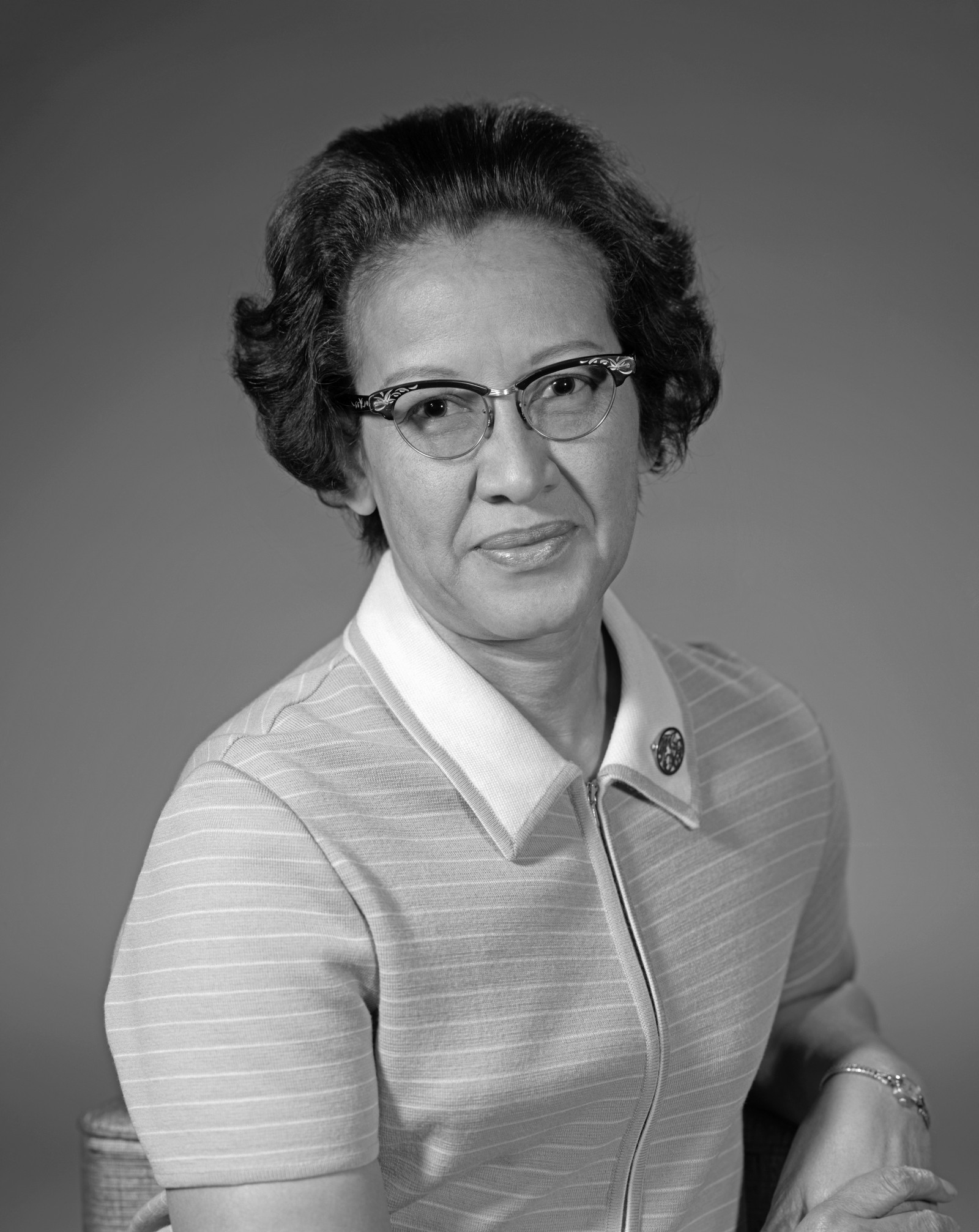
Portrait only in this edition; no reuse-supported contextual media has been verified for this figure yet.
References
- [1]NASA Science: Katherine Johnson (1918–2020)
Supports: Exact life dates, birthplace, education, Shepard and Glenn missions, later space programs, and retirement.
- [2]NASA: Katherine Johnson, The Girl Who Loved to Count
Supports: Institute childhood, 1953 NACA hiring, trajectory calculations, collaborative space-program contributions, and 2015 honor.
- [3]NASA: Katherine Johnson, The Girl Who Loved to Count
NASA
Supports: 1953 — Joins Langley: Begins mathematical work at NACA’s Langley laboratory.
- [4]NASA Science: Katherine Johnson (1918–2020)
NASA
Supports: 1961 — Calculates a spaceflight path: Calculates the trajectory for Alan Shepard’s Freedom 7 mission. 1962 — Checks orbital-flight calculations: Rechecks the electronic-computer calculations before John Glenn’s Friendship 7 mission.
Last reviewed 2026-11-08 · NASA trio addition; primary-source review · Record ID katherine-johnson. A curated, source-informed article — not openly editable and not independently scholar-reviewed. Corrections process.