Aeronautical engineering · Mathematics · Equal opportunity in STEM
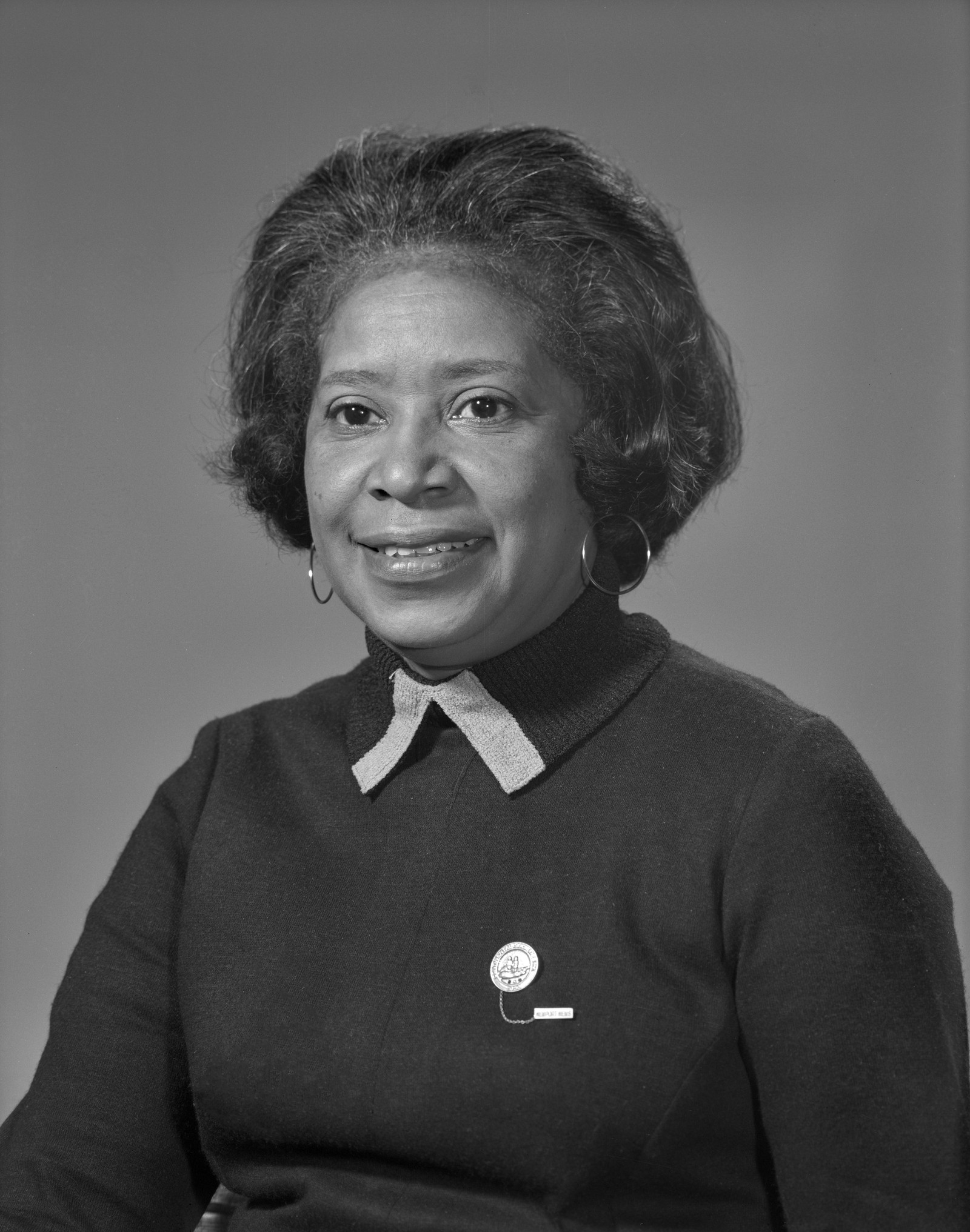
Mary Jackson
1921–2005
Jackson studied how air moves around aircraft, using wind-tunnel experiments and mathematics. In 1958 she became an engineer at Langley; NASA recognizes her as its first Black woman engineer. She later managed Langley’s Federal Women’s Program, working to improve opportunities for women in technical careers. Her story, alongside Katherine Johnson, Dorothy Vaughan, and Mary Jackson, is depicted in Hidden Figures; the film dramatizes their history, while the NASA sources document their work.[1],[2]
Read this story
Jackson studied how air moves around aircraft, using wind-tunnel experiments and mathematics. In 1958 she became an engineer at Langley; NASA recognizes her as its first Black woman engineer. She later managed Langley’s Federal Women’s Program, working to improve opportunities for women in technical careers. Her story, alongside Katherine Johnson, Dorothy Vaughan, and Mary Jackson, is depicted in Hidden Figures; the film dramatizes their history, while the NASA sources document their work.[1],[2]
Local connection. Place-based roots in Hampton, Virginia: Jackson grew up, studied, worked, and supported young science learners there. Her engineering contributed to national aeronautical research.
Impact reached: United States aeronautical research; Women pursuing NASA technical careers; Hampton youth science learners. (Impact describes who was reached; it is not a place of residence.)
From institutional research
Deeper context
NASA: Mary W. Jackson biography
NASA
According to NASA: 1951 — Joins West Computing: Begins NACA Langley work under Dorothy Vaughan.[3]
NASA History: Mary W. Jackson
NASA
According to NASA: 1958 — Becomes an engineer: Completes additional training and earns an engineering promotion at Langley. 1979 — Expands career opportunities: Changes careers to serve as Langley’s Federal Women’s Program Manager.[4]
Inquiry & making
Inquiry and making prompt
Make two paper airplanes with different wing shapes. Keep the thrower and starting point the same. Measure the flights and discuss how to make the comparison fair.
Places
Where Mary was born, had roots or studied, and worked — distinguished from where their impact reached.
- Born
- Hampton, Virginia
- Roots / education
- Hampton, Virginia
- Worked
- Calvert County, Maryland; Hampton, Virginia; Langley Research Center, Hampton, Virginia
| Relationship | Documented place | Map point | Sources |
|---|---|---|---|
| Birthplace | Hampton, Virginia | Hampton city, VACensus representative point | [1][2] |
| Roots / education | Hampton, Virginia | Hampton city, VACensus representative point | [1][2] |
| Work | Calvert County, Maryland | Calvert County, MDCensus representative point · county-level, coarser | [1][2] |
| Work | Hampton, Virginia | Hampton city, VACensus representative point | [1][2] |
| Work | Langley Research Center, Hampton, Virginia | Hampton city, VACensus representative point | [1][2] |
Timeline
1921-04-09
1951
Joins West Computing: Begins NACA Langley work under Dorothy Vaughan.[1],[3]
1958
Becomes an engineer: Completes additional training and earns an engineering promotion at Langley.[2],[4]
1979
Expands career opportunities: Changes careers to serve as Langley’s Federal Women’s Program Manager.[2],[4]
2005-02-11
Gallery
Portrait only in this edition; no reuse-supported contextual media has been verified for this figure yet.
References
- [1]NASA: Mary W. Jackson biography
Supports: Exact life dates, Hampton education, teaching, wind-tunnel work, engineering promotion, youth science, and Federal Women’s Program.
- [2]NASA History: Mary W. Jackson
Supports: Hampton birthplace, engineering research, access to training, 1979 career change, and retirement.
- [3]NASA: Mary W. Jackson biography
NASA
Supports: 1951 — Joins West Computing: Begins NACA Langley work under Dorothy Vaughan.
- [4]NASA History: Mary W. Jackson
NASA
Supports: 1958 — Becomes an engineer: Completes additional training and earns an engineering promotion at Langley. 1979 — Expands career opportunities: Changes careers to serve as Langley’s Federal Women’s Program Manager.
Last reviewed 2026-11-08 · NASA trio addition; primary-source review · Record ID mary-jackson. A curated, source-informed article — not openly editable and not independently scholar-reviewed. Corrections process.